Friday, May 27, 2011

From the Bookshelf: When George Came to Edinburgh


Title: When George Came to Edinburgh
Author: John Neil Munro
Publisher: Birlinn
Year: 2010

At the beginning of the 1979/80, Hibernian got off to one of their worst starts for a number of seasons and were rooted to the bottom of the Premier Division. Extraordinarily, their chairman Tom Hart went out and bought his team the world’s most famous player. Cue Roy of the Rovers stuff where the team, buoyed by their new signing make a late surge for the title, right? Sadly that wasn’t the case. You’ll have noticed I said ‘world’s most famous’ not ‘world’s best’ player. Hibs had signed George Best, the one-time ‘fifth Beatle’ and now playing in fits and starts for Fulham between periods in the United States. This is the story of George Best’s spell in Edinburgh.


John Neil Munro paints a very clear of what sort of club Hibs were and what sort of shape George Best was in prior to his move to the capital. Well researched and speaking to a wide variety of sources, Munro paints a vivid portrait of Best’s stay in Edinburgh and how he impacted upon Scottish football. Munro has also taken the time to get behind the stories that appeared in the papers during the Ulsterman’s season – we find out that the infamous photograph that appeared nationwide indicating Best was worse for wear was in fact just catching Best at a bad angle (haven’t we all been there?).


When George Came to Edinburgh shines a light on an often neglected period of George’s life, but Munro highlights several of the issues that would afflict Best the rest of his life were becoming noticeable even by 79/80. My only quarrels with this finely written book is the inaccuracies stating Hibs had won the League Cup in 1993 (where they reached the final only to lose to Rangers) and the final chapter, reflections on George which instead of all being lumped together could have been lightly peppered throughout the book which would have added something more to the prose.


Buy When George Came to Edinburgh here.

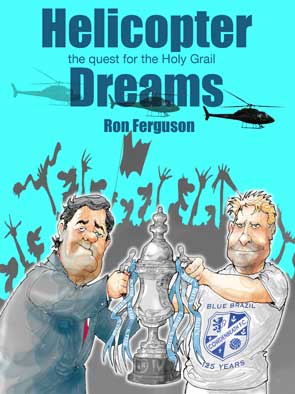
From the Bookshelf: Helicopter Dreams


Title: Helicopter Dreams
Author: Ron Ferguson
Publisher: Famedram Publishers
First published: 2006


Some thirteen seasons after his previous book on the plight of Cowdenbeath FC, Ron Ferguson’s Helicopter Dreams tells the story of Cowdenbeath’s Championship winning season of 2005/06.


Back in 1992/93, Ferguson intertwined the story of Cowdenbeath’s miserable season with the rich and largely ignored story of this maligned town in the Kingdom of Fife in Black Diamonds and the Blue Brazil. Having being prompted into reading BDBB by Daniel Gray, author of Stramash, I was taken aback by the warmth, wit and fantastic story that unfolded over every page. It is a book that will stand the test of time and should be required reading of all football fans, but especially those in Scotland – it tells the story of certain aspects of Scotland’s history than any mighty tome or historian ever could.


In that regard, Helicopter Dreams had a lot to live up to and sadly it was found wanting. Where BDBB was almost perfect in its balance between the history of the town and the football club, Helicopter Dreams suffers from having less historical material to draw from and the sadly, less interesting narrative (peculiarly, most sports books are better when the team is going through a crisis rather than a journey to the summit).


I was at Central Park on the final day of the season where Cowdenbeath defeated Elgin City 2-1 to clinch the Third Division Championship and there is no doubt it was a historic moment in the club’s history – grown men were weeping, the pitch was invaded and there was a sense of jubilation in the air, but Ferguson, who so mastered his narrative structure in BDBB lets the reader down by using messages from forums and then having supporters describe the final day of the season. It sadly becomes repetitive and makes the size of the achievement, a once in a generation championship winning team, seem dull. The book could also do without the final third – a Question and Answer section with the players, manager Mixu Paatelainen, chairman, backroom staff and fans – fashioned into a narrative and having such unfettered access Ferguson, who is capable of elegant prose, could have made this very interesting but sadly it came across to this reader as ‘bonus chapters’ rather than enhancing the first section of Helicopter Dreams.


However, readers should not feel Helicopter Dreams is a waste of your time – it very much is not, but in comparison to his previous piece of work, Ferguson hasn’t made Helicopter Dreams as readable as his 1990s classic.


Buy Helicopter Dreams here.